

Restock
Feature overview
The restock function optimizes the supply chain by:
Preventing product shortages and maximizing operational continuity
Consolidating reorder requests per supplier to reduce delivery fees
A red “product to restock” card highlights risks when entering the stock module.
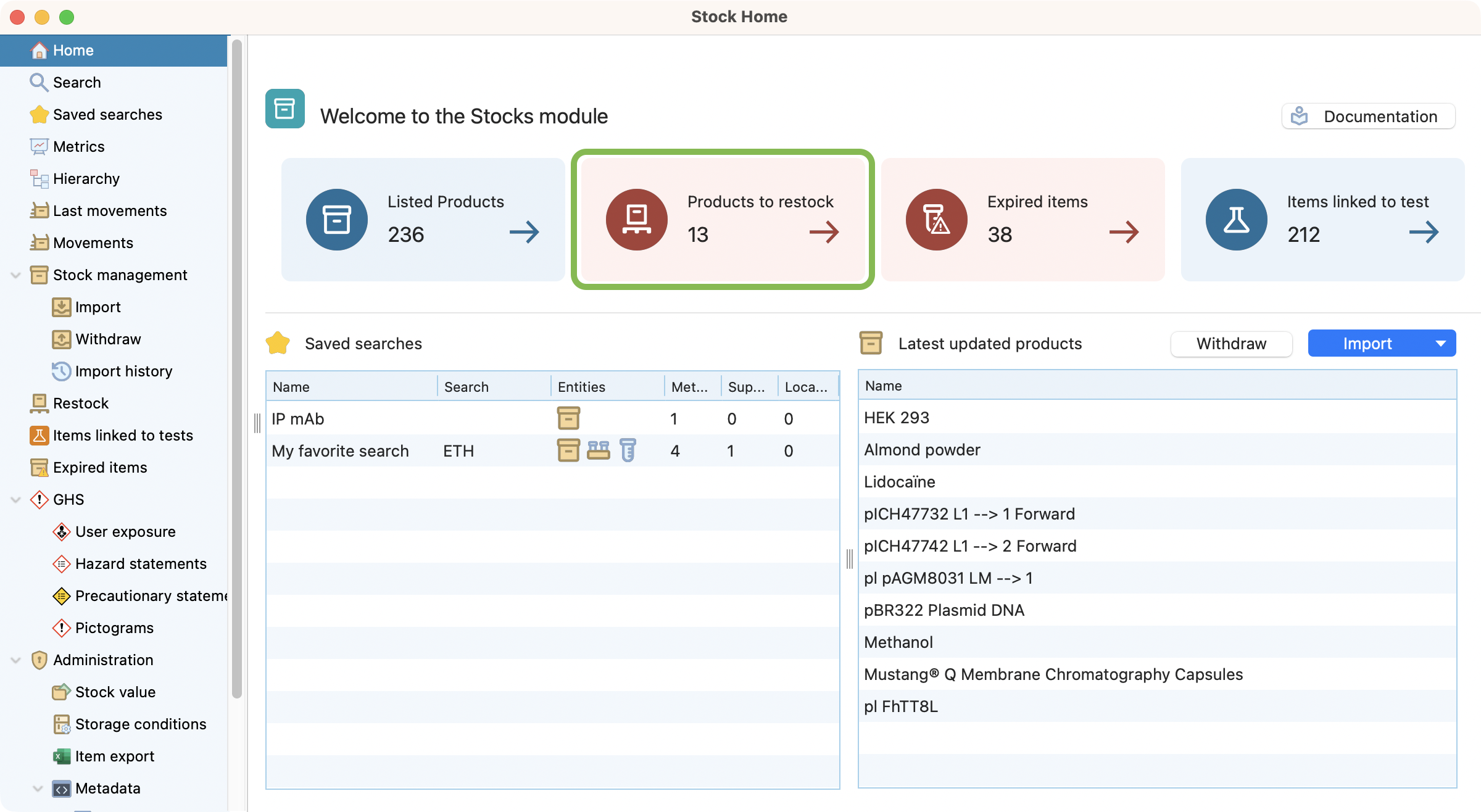
Restock card indicating product shortage risk.
Steps to follow
1. Access the restock window
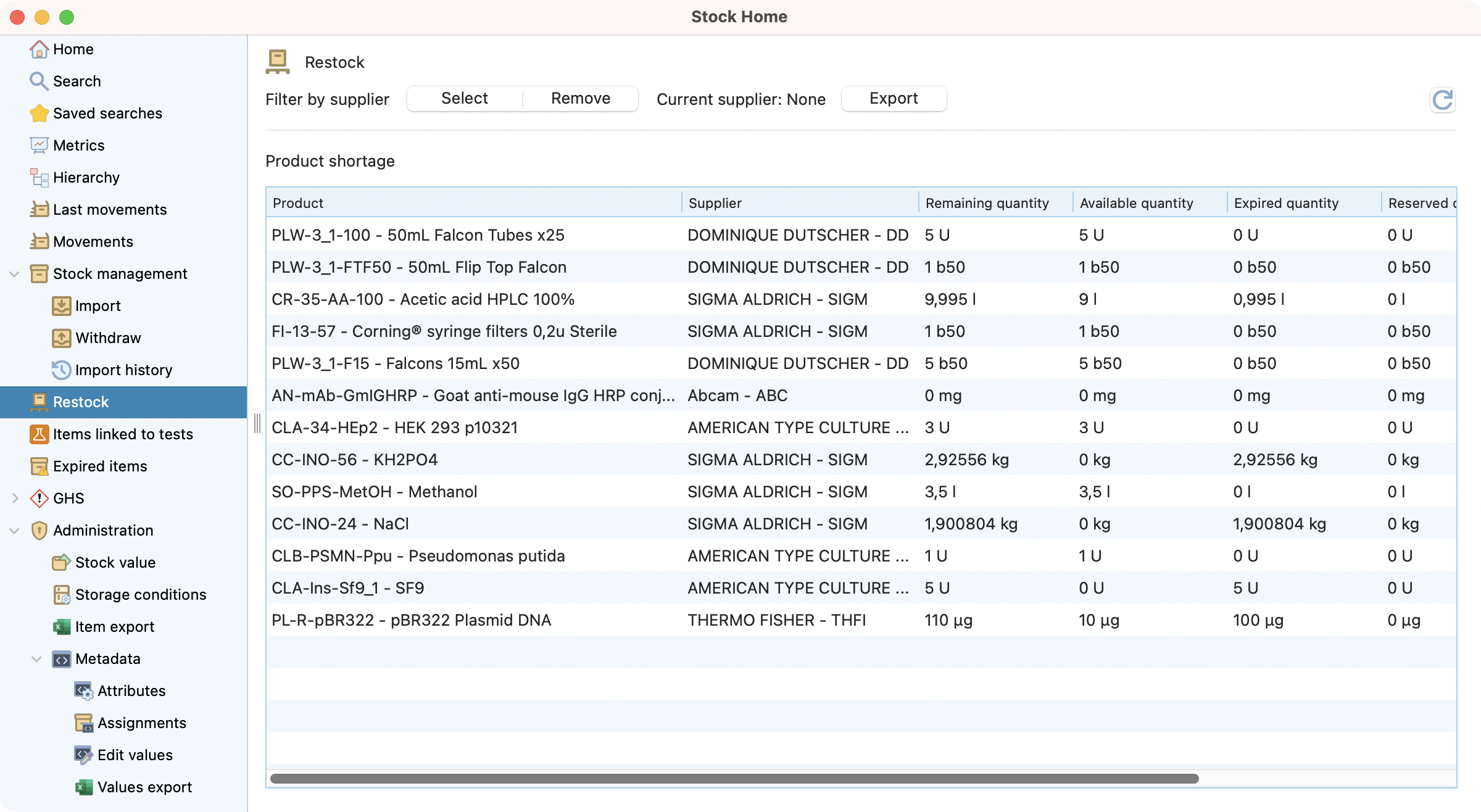
Restock page showing low-stock products.
Note
Displays products where “Remaining Quantity” is below the configured “Minimum Quantity” (set in product details).
Remaining Quantity = total items available quantities converted to default unit.
2. Filter by supplier
Select a supplier to filter products and auto-generate the next order.
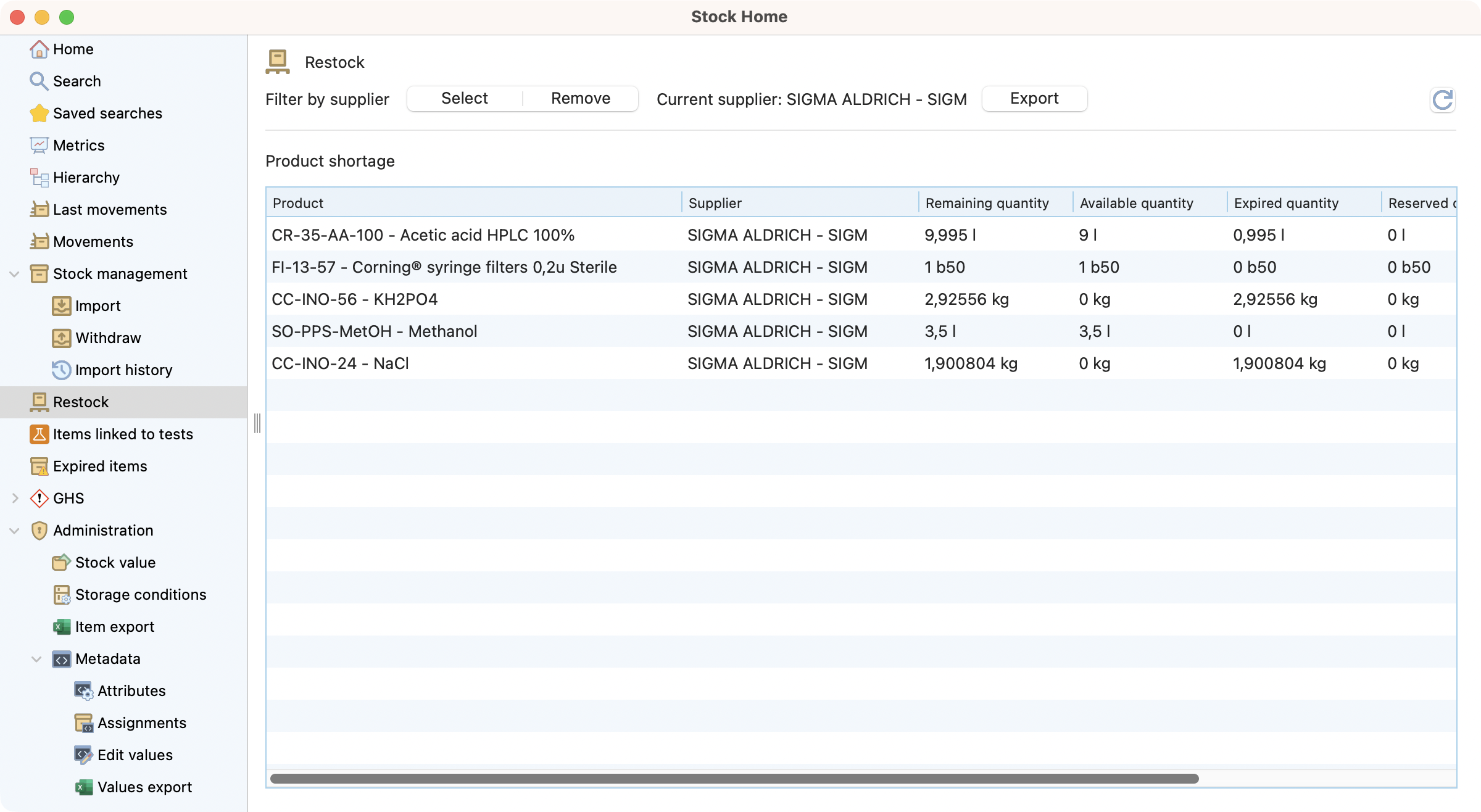
View of the restock list after selecting a supplier.
3. Export the list
Export contains all selected supplier products with current and required quantities (Maximum Quantity − Available Quantity).
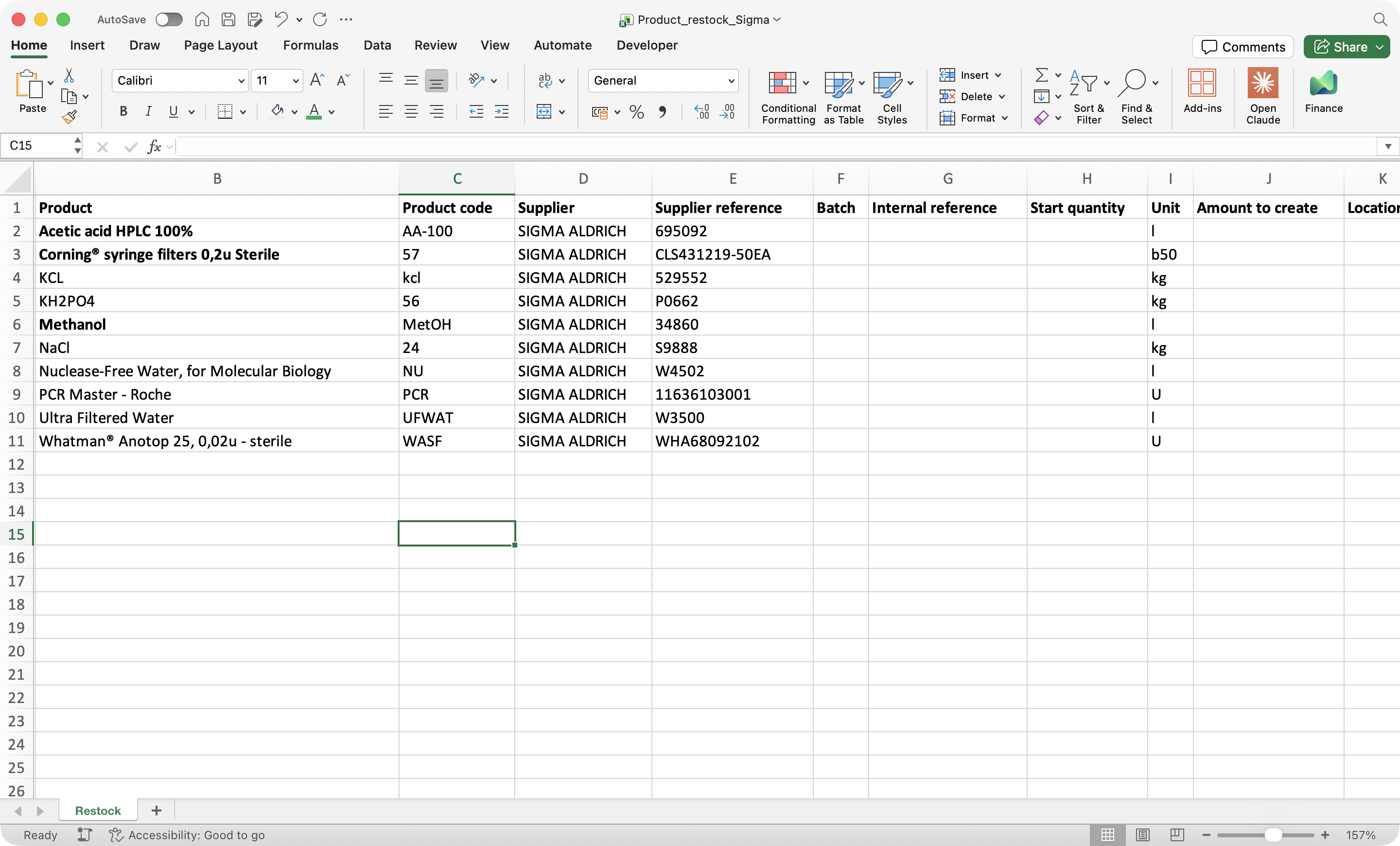
Exported spreadsheet.
Note
Export without selecting a supplier for a complete overview.
4. Complete the spreadsheet
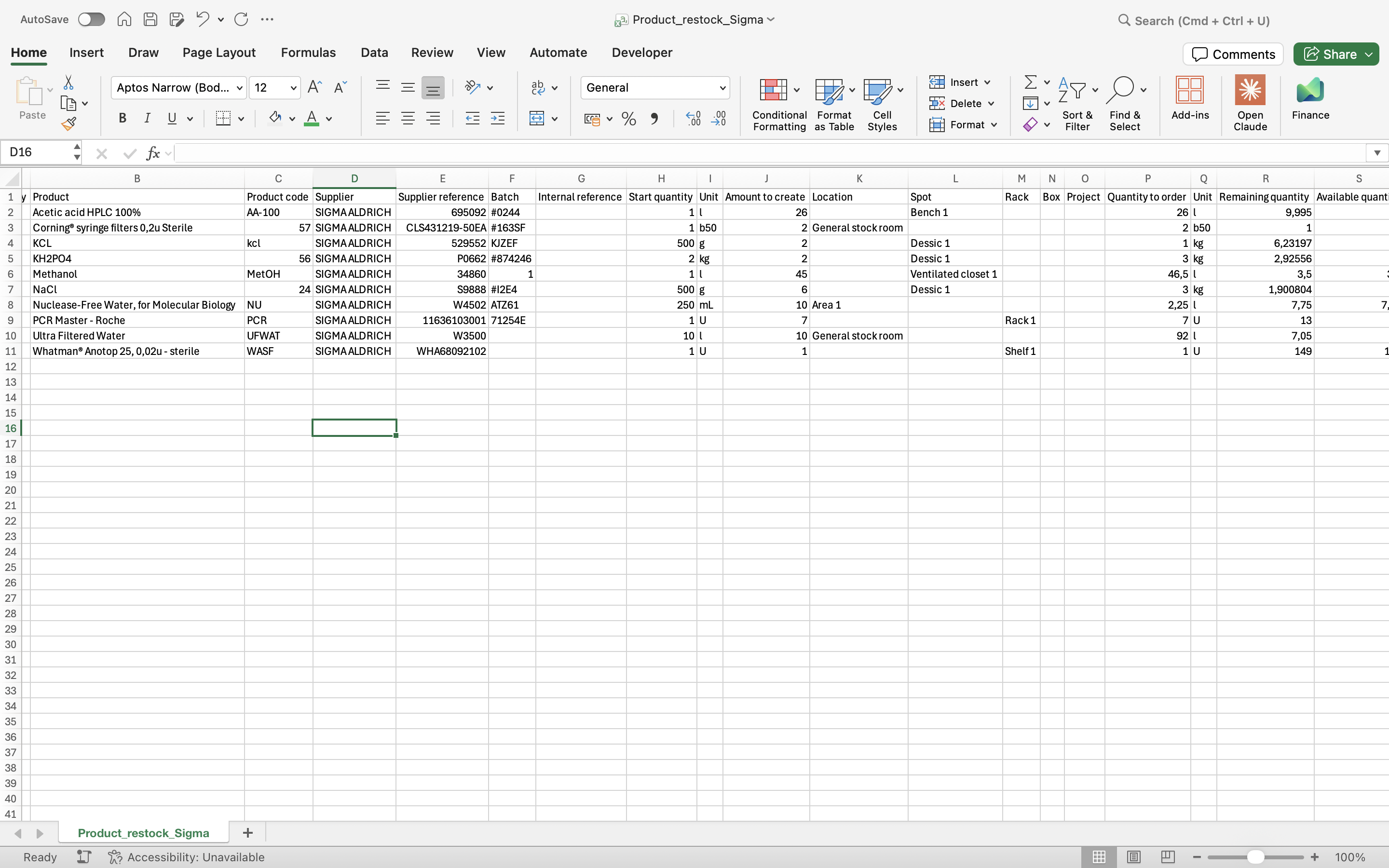
Spreadsheet with columns to fill in.
Tip
Add new product references if needed.
5. Import the CSV file
After delivery, import the file via the import panel.
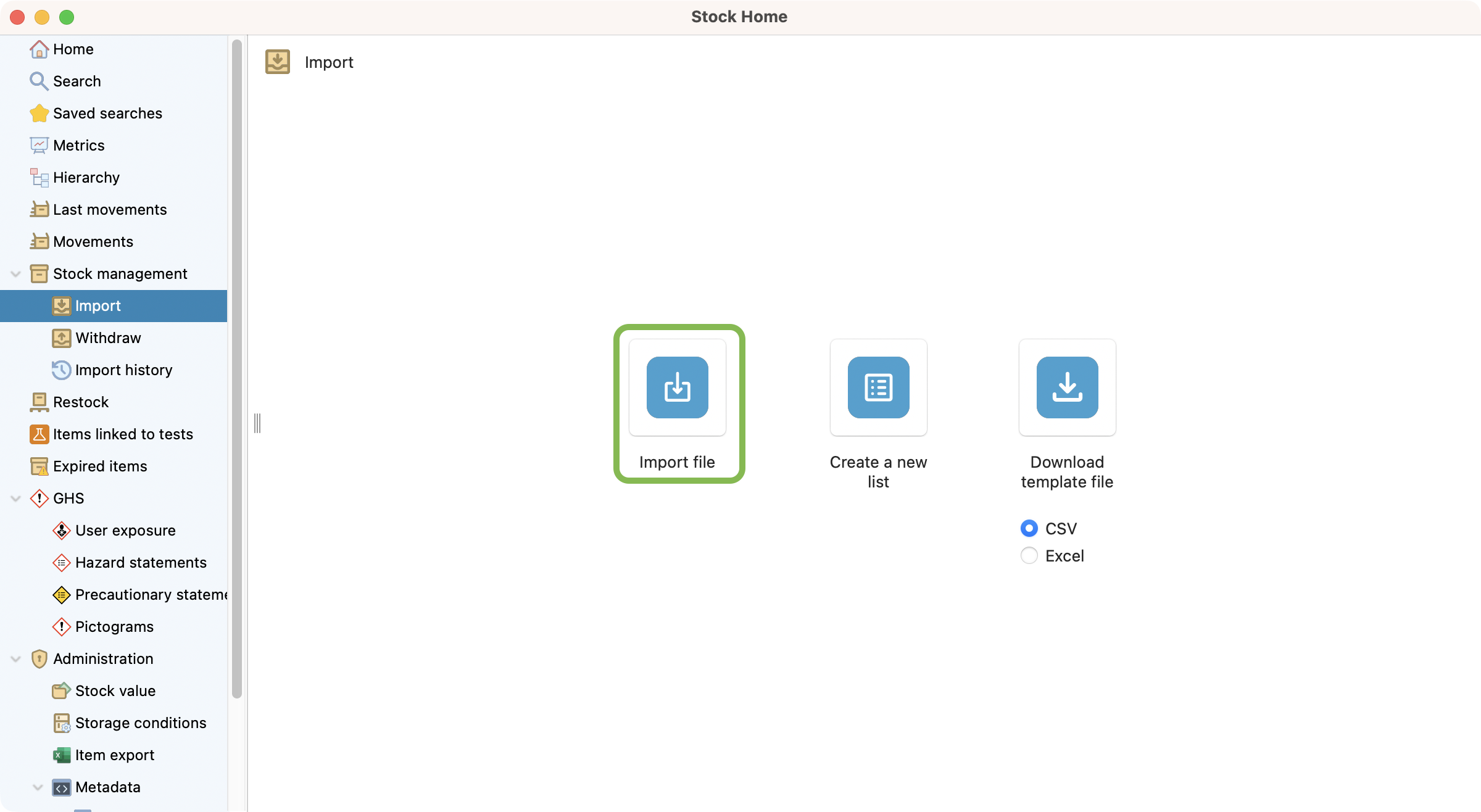
Spreadsheet import interface.
Warning
Save as CSV-UTF8 format before importing.
6. Verify the import
Laby alerts you to format errors or missing information.
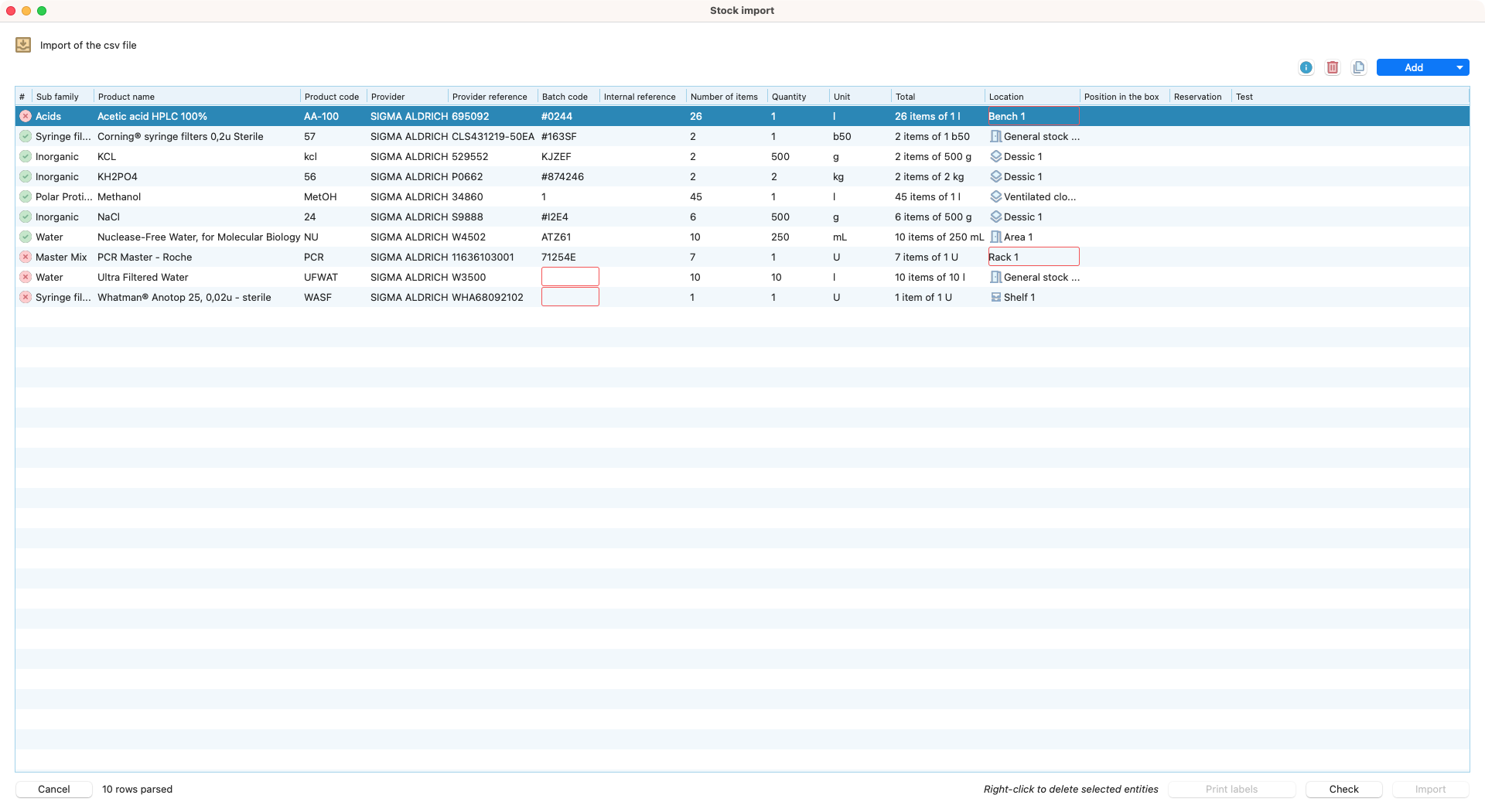
Import errors highlighted in red for correction.
7. Correct the file
Click red cells to fix or add missing data, then proceed with import.
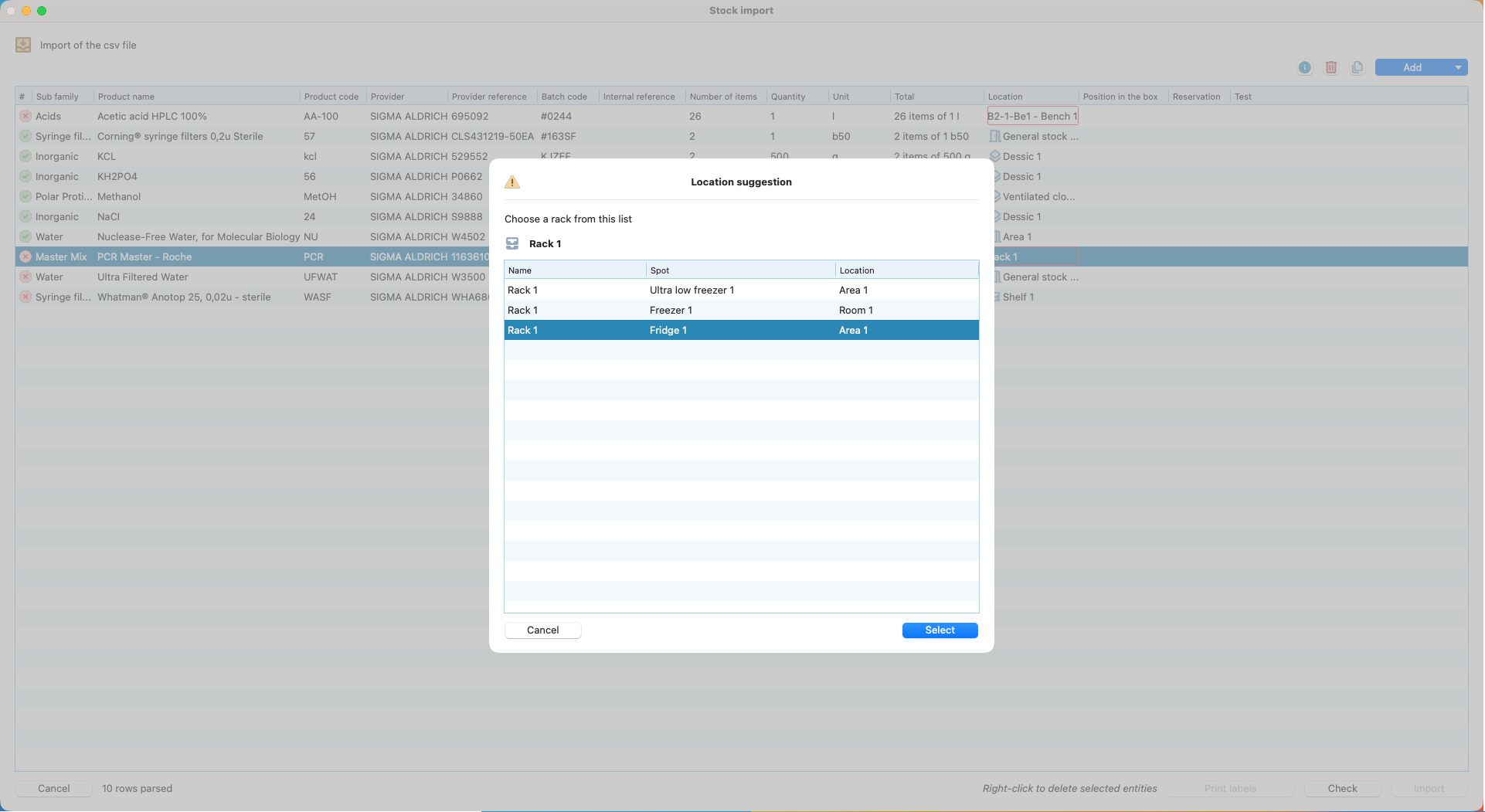
Correcting import errors by filling in missing information.
Tip
Correction actions by column:
Column |
Action |
|---|---|
Batch |
Right-click to select existing |
Number of Items |
Double-click to edit quantity received |
Quantity |
Double-click to edit per-item quantity |
Unit |
Double-click to edit (must match product unit family) |
Location |
Double-click to specify |
Position in Box |
Double-click to specify |
8. Confirm and import
Laby automatically updates stock quantities based on imported data.
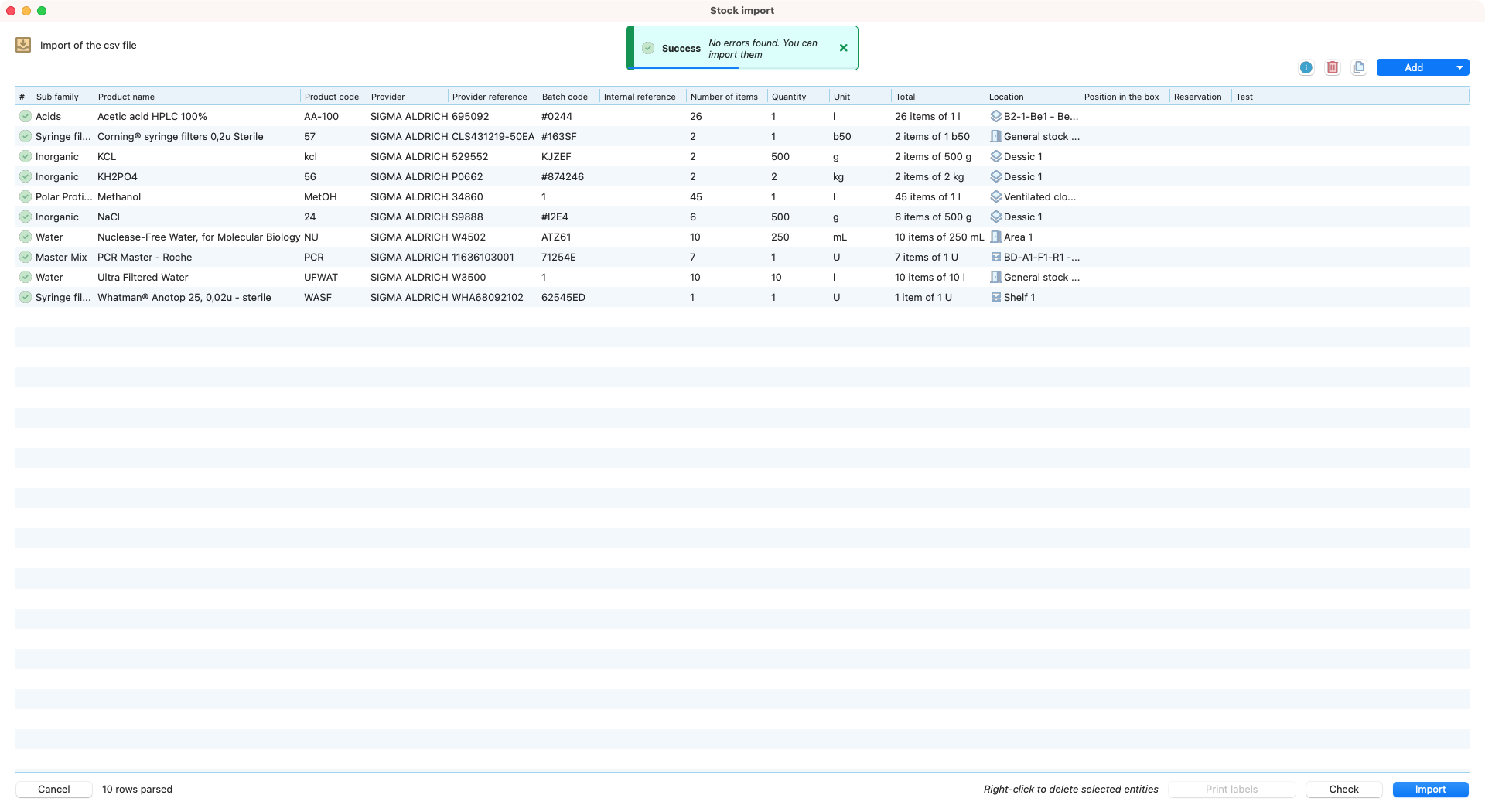
Import successful.